


[Read Time - 8 minutes]
Early in my career, I came across an interesting cat named Steve. I honestly can’t remember his name, but it feels like his name was Steve.
Steve was a fellow Wedding Photojournalist like myself and passionately dedicated to his craft and the purity of photojournalism.
We had a lot in common, and we had extremely vibrant conversations, but Steve had a fatal flaw…
Now, I should give some context here because it is relevant and provides a nice background on how modern wedding photography has evolved over the years.
Photojournalism, like any other journalism, if practiced properly, is the communication and preservation of news and information through photographs.
It’s unbiased, unfiltered, and untouched, or to be less poetic, REAL.
I know it’s generalizing, but when I think of photojournalists, I typically picture photographers diving into the dirt, ducking behind bombed-out cars, taking cover while bullets whiz by, and courageously continuing to click.
Those photographers are capturing the horrors of war - photographing soldiers peering behind their guns while they peer behind their cameras - unprotected and unafraid of the death and destruction all around them - just living to “get the shot.”
Weddings aren’t exactly like that, but sometimes it feels that way.
Wedding Photojournalism is everything I just described, minus the bullets.
When I shot my first wedding, I experienced the same rush many war photojournalists experienced. I was looking for that elusive and perfect moment to capture - occasionally ducking behind a piano.
It was exhilarating, and when I committed full-time to weddings, THIS was how I wanted to shoot them. There was a bit problem, though.
At this time in history, this was not contemporary wedding photography.
Even though it was the mid 90’s, wedding photography was still stuck in the very old-school, super-posed traditions of the 80’s.
Lucky for me, two things happened around that same time.
#1 Martha Stewart Weddings (the magazine) launched
#2 The wedding of John Kennedy (JFK’s son) to Carolyn Bessette, shot by Denis Reggie, a relatively unknown wedding photographer in Georgia.
BTW, I mentioned both of these in last week’s issue that started all of this.

Martha Stewart Weddings was different. It featured multi-page wedding spreads with a dozen or more photos from each wedding.
The weddings took place mostly outdoors with lots of fun, crafty, yet designer touches, and the photos featured a new standard for weddings and wedding decor.
Even today, you can see what Martha birthed in the wedding world.
Backyard big-ticket boutique bridal became a big thing. Ever seen a cute chalkboard at a wedding? Martha did it. Cute photos of the couple hung on a string between trees...Martha. Mason jars for drinking glasses…moonshiners, but THEN Martha.
These weddings were all natural, but nothing looked posed or like the common wedding photos of that time. This was very new, very cool, and the wedding industry took notice.
Denis Reggie had been building his wedding business slowly for about a decade when he was asked to shoot a wedding for the Kennedy family. He certainly had the photographic skill, but he also had a close family relative assist in the referral.
This led to the very famous and very private wedding of John Jr. and Carolyn. This wedding was so private that only two photos were ever seen, but those two changed wedding photography forever.
They were unposed and unpretentious - honest and attainable…if you were prepared to capture the authentic moment (and NOT pose it.)
While I was still living in California and still considering wedding photography as my calling. As I mentioned last week, I found myself in a small hotel meeting room listening to Denis speak to a group of photographers. While seeing these photos and hearing him tell his story of that wedding day and his approach, he used the term Wedding Photojournalism, and my life changed.
“That’s what I am!” I said to myself.
From that moment on, I, too, was a Wedding Photojournalist.
Thanks to Martha, this style was catching fire in creative California, but when I moved to Oklahoma a few months later, I was a really different breed of photographer.
I remember showing the photos of my first two weddings to one of the more successful pros in town.
He was younger than most of the wedding photographers in the area, and I was hopeful this fresh, new approach would appeal to a popular, more youthful pro who understood the importance of something new.
He looked at my photos, nodded and said, “Yeah, I do that ‘journalism thing’ a little myself,” then showed me one BW photo of a pair of shoes.
Yeah, you’re probably thinking the same thing I did at the time, but he was a great photographer who recognized the value in my work and right there he offered me the chance to shoot his next wedding with him.
He gave me six rolls of BW film and a hundred bucks for the day. I shot, he processed, and I could buy prints at cost to add to my portfolio. I was happy and he got something new for his clients.
And for the next year, I shot weddings, MY WAY (Sinatra would be so proud). His business grew, and so did my reputation.
A funny thing happened, though. According to my photographer boss, he started booking more weddings because of my work, which was very modern by 1990’s Oklahoma standards.
For me, this was THE WAY I always thought weddings should be shot.
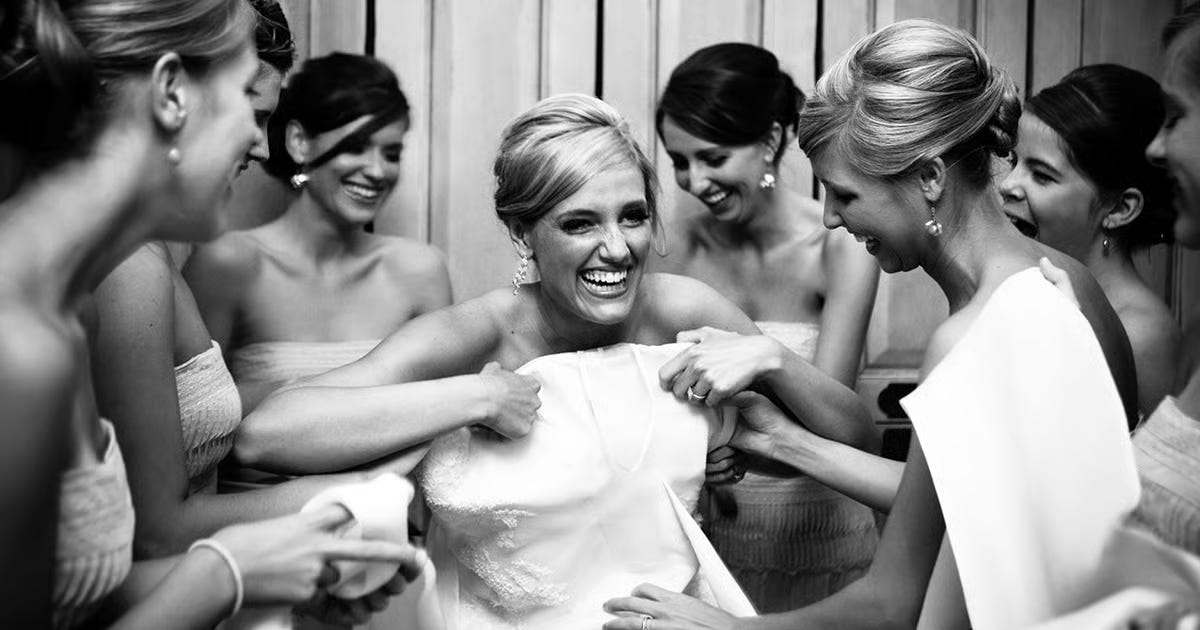
I didn’t pose anything. I looked for secret moments, pure moments that often went unseen by everyone…until they saw the photos.
It was fun working as second shooter/associate, but I needed to take this show on the road…on my own.
When he offered me to join his business as a partner, I declined.
I decided to hang my own shingle as a Wedding Photojournalist.
I know I wasn’t the first, but I was the first in my town to brand himself as one.
And as this new form of wedding photography grew, so did the number of photographers adopting this style.
Some were great at it, some faked it, but it was a cool club, and that’s where I met Steve (remember him from earlier?)
We weren’t friends by any stretch, but we admired each other for our dedication to photojournalism.
He was a real photojournalist. He worked at newspapers and covered real events.
I was just a new wedding photographer, but I think Steve saw me as a kindred spirit.
He saw my work and saw the wholesomeness of genuine moments and I was simply flattered to be seen as a practitioner of the craft.
We both loved shooting and were pretty new to weddings.
For him, weddings were a happy diversion, some extra income, and it sure beat spending a day outside of a courtroom waiting for a glimpse of the “alleged” criminal of the week.
But he took things a bit too seriously.
We kept in touch and loved swapping “wedding war stories,” but one day, the conversation changed.
In a moment of sheepish honesty, he asked about working with the bride and all the family that make up a wedding day.
He wanted to know how I “got around” having to talk to them (or anyone) during the day.
He asked how I “got around” having to shoot the family and bridal party group photos.
I was a bit confused, to say the least, but I replied honestly as well.
“I don’t get ‘around’ them, I shoot them.”
I mean, what else would I say?
“You do?!” he shot back, thoroughly surprised. “I thought you were a photojournalist!”
And then he hopped on this tirade train, I still can’t believe even happened.
For the next ten minutes, I received an amplified earful from him about how a true photojournalist has no interaction during the event.
“They are there to document the day, that’s it.”
I had to ask, “Soooo, you DON’T shoot the wedding groups and family photos?”
“Nope, and I tell my bride that before the wedding so there’s no confusion,” he replied.
OK, I suppose that’s one way to do it.
Our conversation ended shortly after that, and I didn’t hear from Steve for a month or two.
The next time we spoke, he filled my ears with complaints that no one was hiring him, and he couldn’t do this anymore.
Hmmm, I wonder why?
So there is a lesson here, and I’m sure you got it.
When you are a Wedding Photographer. You shoot weddings, which means you shoot every part of the wedding, whether you like it or not.
Your unique and one-of-a-kind, soon-to-be-legendary style takes a backseat when the bride or the mother and father of the bride or the groom or the mother and father of the groom request your photographic talents- even if it goes against your style.
You are there to serve. That’s the gig.
You get to serve with your camera and your exceptional eye instead of serving cake or serving drinks as a bartender, but you are still there to serve.
Don’t be like Steve. He had principles (unusually high ones, unfortunately), and his wedding career died on those principles.
Of course, you get the opportunity to meet with the bride before her wedding (an opportunity I highly recommend, btw).
Use this opportunity to learn as much about the bride just as she’s learning about you.
If you don’t think your work or personality is a good fit, don’t shoot the wedding, BUT remember WHAT you’re doing and WHY you’re doing it.
Do you want to grow your business and become a successful wedding professional, or do you want to be like Steve and have a reputation of being a “great photographer but a real jerk?”
I’m sure you know what goes into a wedding day.
There’s a time for the posed photos, and there’s a time for your unique craftsmanship.
You can and should have principles, but you should also have the heart of a servant.
Combine that with your killer photographic skills, and you have a recipe for greatness.
“The elevator to success is out of order. You’ll have to use the stairs… one step at a time.”
– Joe Girard, The World’s Greatest Retail Salesman
Providing outstanding service to your couples is just one of the little parts of the “inner game of wedding photography.” THIS is what I write about each week for INSIDE WEDDING PHOTOGRAPHY.
If you’d like to be notified each Sunday morning when a new issue is released, click that beautiful blue subscribe button (and thank you in advance). I also share valuable tips and tales in Notes all week.
If you know someone who’d love this juicy insider information, click this equally beautiful and benevolent button here.
If you’re starting and haven’t quite figured out how to handle the hundreds, or even thousands, of photos from an event, I’ve created something to help.
It’s a guide to help you process your wedding in one week, and it’s a system I’ve used for over 25 years and still use today. Don’t spend weeks processing and miss out on The Glow. This system will help you get your photos to your client, make them happy and make you look like the professional you want to be.
Hi Chris, I don't usually like to go to weddings or any other event if I can avoid it. So reading about being a wedding photographer was the last thing on my mind. But I have to say, I was riveted reading your article. Thinking about it, it is a real performance art on the photographer's part right? All the dynamics involved. So interesting.
It’s just like a good story. Be the Obi-Wan Kenobi because your bride is Luke Skywalker.